
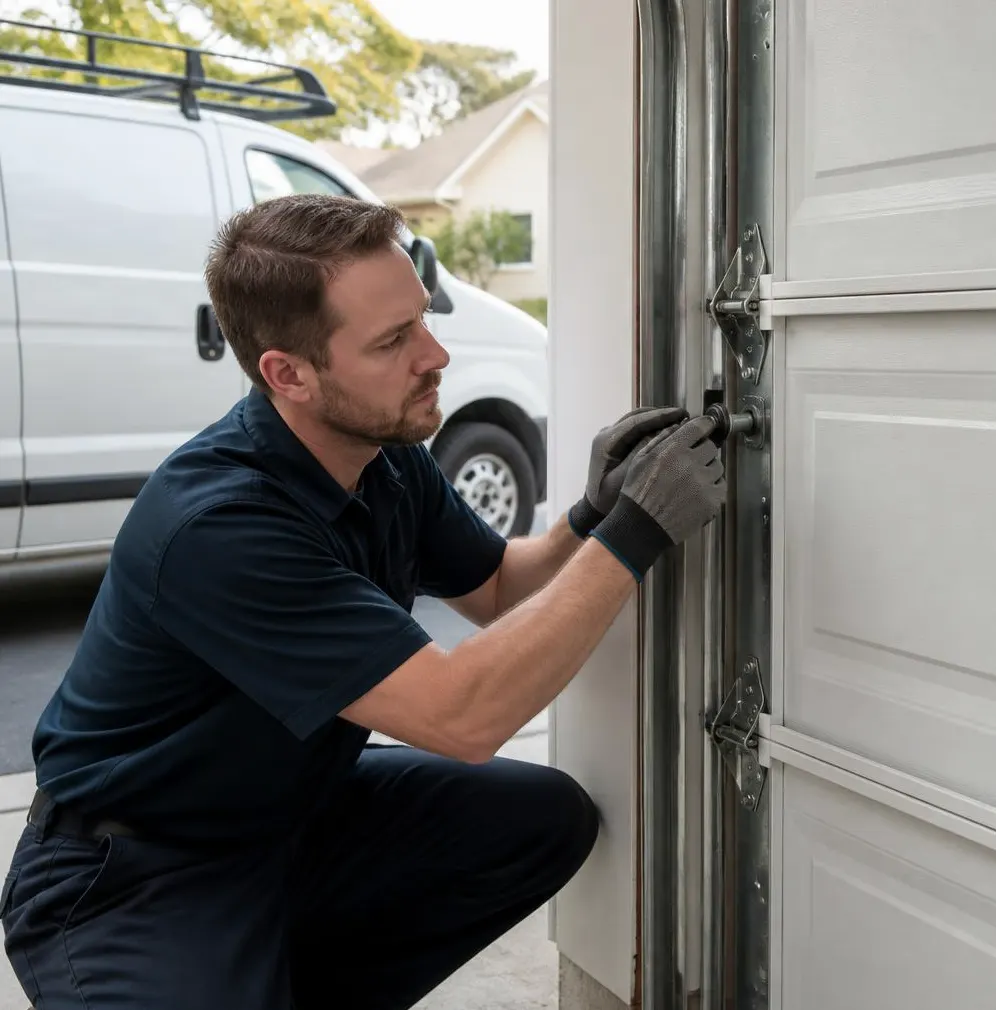
What a Technician Sees on This Call
It usually starts the same way: a homeowner calls about a noisy or drafty garage door, and somewhere in the conversation one spouse says "we need to upgrade to an insulated door" while the other says "that's a waste of money for Washington weather." By the time we arrive to look at the door, we're also refereeing a financial argument that has nothing to do with the broken spring or worn-out rollers that actually brought us there.
Here's the honest answer: insulation helps some households a lot, and does almost nothing for others. It depends on what's on the other side of that garage door, not on marketing claims printed on the box.
What R-Value Actually Means
R-value measures how well a material resists heat flow. A garage door with a higher R-value slows down heat moving through the panel, whether that heat is trying to escape in winter or push in during a rare hot summer stretch. A single-layer steel door might have an R-value close to zero. A door with polystyrene or polyurethane foam sandwiched between two steel skins can reach R-9 to R-18 or higher, depending on thickness and foam type.
That's the whole concept. It's not about keeping the garage "warm" the way a heated room stays warm — it's about slowing the rate of heat loss or gain through that one large surface.
Who Actually Benefits
- Attached garages with living space above or beside them. If a bedroom, laundry room, or home office shares a wall or ceiling with the garage, an uninsulated door lets cold air sit against that shared surface all winter, making those rooms harder to heat and increasing condensation risk.
- Converted or semi-finished garages. Workshops, home gyms, or hobby spaces where someone spends real time need a door that doesn't turn the whole space into a cold box every time it's opened.
- Garages with a wall-mounted heater. If you're paying to heat the garage directly, an uninsulated door is throwing a good chunk of that heat straight outside.
- Anyone near wind-exposed sites. The occasional windstorms that roll through this area put real pressure on a garage door. Insulated doors are typically built with thicker steel and a sandwiched core, which adds rigidity and reduces flex and rattle during gusts — a side benefit that has nothing to do with temperature.
Who's Paying for Nothing
- Detached, unheated garages used for storage or parking only. If no one spends time out there and nothing climate-sensitive is stored inside, the temperature swing inside an insulated vs. uninsulated door is rarely something you'll notice or benefit from.
- Homes where the garage is well separated from living space. If there's no shared wall or ceiling, the heat-loss argument mostly disappears.
Given how mild winters are here compared to colder parts of the country, the pure heating-bill math on an insulated door often doesn't pencil out fast for a garage that's just housing cars and lawn equipment. The payback period can stretch out for years, sometimes longer than people plan to stay in the house.
The Factors That Matter More Than the R-Value Number
This is the part that gets skipped in most showroom conversations. A high R-value door with bad weatherstripping, gaps at the bottom seal, or warped panels will leak more air than a modest R-value door that seals tightly. Before spending extra on insulation, it's worth checking:
- Bottom seal condition — cracked or flattened seals let in drafts, water, and debris regardless of what's inside the panel
- Weatherstripping along the sides and top of the frame
- Panel alignment and any warping, which is common on older wood-composite doors that have taken on moisture or developed rot and moss over repeated wet seasons
- Gaps around the opener unit or service door cut into the garage door frame
In a lot of homes, sealing up these gaps closes more of the comfort problem than upgrading the door itself would.
The Honest Cost Trade-Off
Insulated doors cost more upfront — national pricing typically runs a few hundred to over a thousand dollars more than a comparable non-insulated steel door, depending on size, style, and foam core thickness. They also tend to be a bit heavier, which can mean a slightly stronger opener or a spring system rated for the extra weight. That's not a reason to avoid one if you need it — it's just part of planning the budget honestly instead of assuming insulation pays for itself quickly on energy savings alone.
When to Call Maple Valley Garage Door Specialists
If you're trying to decide whether insulation makes sense for your specific setup, that's exactly the kind of call worth making before you buy anything. We'll look at how your garage connects to the rest of the house, check the condition of your current door and seals, and give you a straight answer — including when the better move is garage door maintenance and weatherstripping instead of a full garage door installation. If your existing door is sound but drafty or noisy in wind, we can often fix that without replacing anything.
If you're in Maple Valley, Covington, Black Diamond, Renton, Kent, Auburn, Enumclaw, or Issaquah and want a real answer instead of a sales pitch, give us a call. We'll settle the argument for you.