
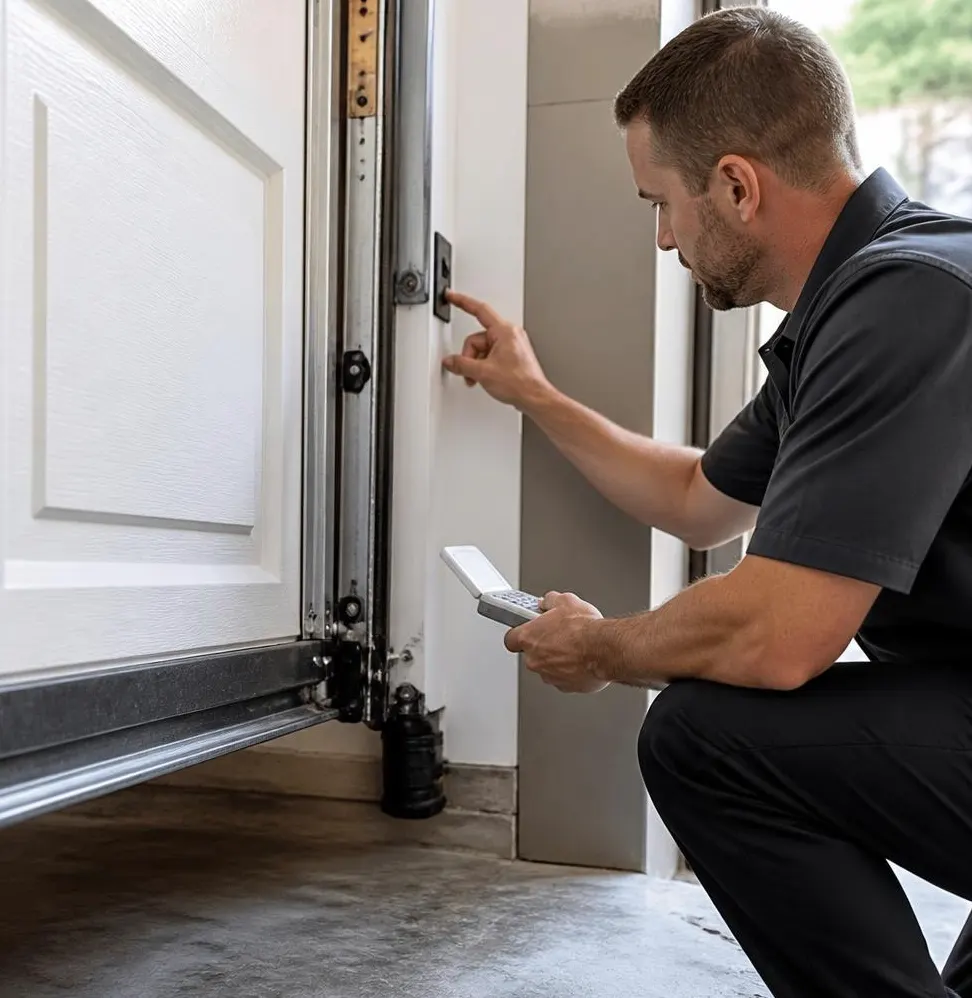
What a Technician Sees on This Kind of Call
The pattern is familiar every fall and winter: a wind or ice storm knocks the power out overnight, and by morning someone's car is trapped behind a garage door that won't budge. Sometimes the homeowner has never touched the emergency release cord and doesn't know it exists. Other times they've pulled it but didn't support the door on the way down, and it dropped hard onto the floor or a bumper. Once power comes back, the next call is usually about an opener that won't respond at all, or a trolley that never reconnected to the door, so the opener runs but the door doesn't move. None of this is complicated once you know the order of operations, but doing it wrong, especially on a heavy door, is how people get hurt or bend hardware.
Tools You'll Need
- A flashlight or headlamp (outages rarely happen at a convenient hour)
- A step stool, if the release handle hangs higher than you can comfortably reach
- Work gloves, for grip and to protect your hands on the track and door edge
- A locking C-clamp or a pair of locking pliers, useful if you need to prop the door open or keep it from sliding
A Note on Local Conditions
After weeks of rain, wood garage doors and even steel doors with worn weatherstripping can be noticeably heavier than usual, and tracks can collect grit, moss residue, or a thin film of ice during a cold snap. If a door that normally lifts easily suddenly feels like dead weight, that's not just dampness, it may be a sign the spring is already struggling. Don't force it.
How to Manually Open the Door During an Outage
- Check the door position first. If the door is already closed, you're in the safest starting position. If it's open and the power goes out, leave it open if you can and work out the closing steps below before anything else.
- Find the emergency release cord. It's the red cord hanging from the trolley on the rail inside the garage, usually a few feet in front of where the opener motor sits.
- Pull the cord straight down, firmly. This disconnects the trolley from the carriage, separating the opener from the door. You'll feel it release.
- Lift the door slowly with both hands, using your legs. Grip it at the bottom, not the middle, and raise it evenly. If one side rises faster than the other, or the whole door feels unusually heavy, stop. That imbalance is almost always a spring problem, and that's a job for a technician, not something to push through.
- Secure the door in the open position. Once disconnected from the opener, nothing is holding the door up automatically. Clamp a locking plier onto the track just below the bottom roller on each side, or use whatever stops are built into your track system, so the door can't come down on its own.
How to Close the Door Manually
- Remove the clamps or stops you used to prop the door open.
- Lower the door slowly and evenly, keeping your hands on the sides of the door rather than in the middle, and watch your fingers near the panel joints as they fold down.
- If your door has a manual slide bolt lock, engage it. With the opener disconnected, that lock is the only thing keeping the door from being pushed up from outside, which matters if a storm is bringing wind along with the outage.
How to Re-Engage the Opener Once Power Returns
- Make sure the door is fully closed before you do anything else.
- Pull the emergency release cord again, or move the release arm toward the door, depending on your model. This resets the mechanism so it's ready to reconnect.
- Press the wall button or remote. As the door travels, the trolley should click back into the carriage and pick the door back up within the first few inches of movement.
- Run the door through one full open-and-close cycle to confirm the reconnect took. If it opens but won't close, or stops and reverses partway, don't keep cycling it. Repeated attempts on a misaligned trolley or a sensor that got bumped during the outage can strip gears or damage the track.
What's Safe for a Homeowner vs. What Needs a Technician
Pulling the release cord, manually lifting a door that feels properly balanced, and reconnecting the opener after power returns are all reasonable DIY tasks. Call a technician if the door feels heavy or uneven when you lift it, if it won't stay up on its own even with the opener disconnected, if the trolley won't reconnect after several tries, if the opener runs but the door doesn't move at all, or if the safety sensors won't line up after the outage. Those symptoms point to spring tension, track alignment, or opener wiring issues that are easy to make worse by guessing.
When to Call Maple Valley Garage Door Specialists
If your door struggled to lift manually, closed unevenly, or the opener won't reliably reconnect after the power comes back, it's worth having it looked at before the next storm takes the power out again. We handle Garage Door Opener Repair & Installation for openers that won't reconnect or respond correctly, and Spring Replacement for doors that feel heavy, uneven, or hard to lift by hand, which is often the real reason a manual release turns into a stuck door. For doors that won't move at all, our Emergency Garage Door Service covers calls during and right after storms, when you need someone out quickly rather than waiting for a routine appointment.
If a recent outage left your garage door acting up, or you just want it checked before the next wind storm rolls through, call Maple Valley Garage Door Specialists and we'll get it sorted for you.